 Accès client
 Gymnocladus Dioicus
Kentucky Coffeetree
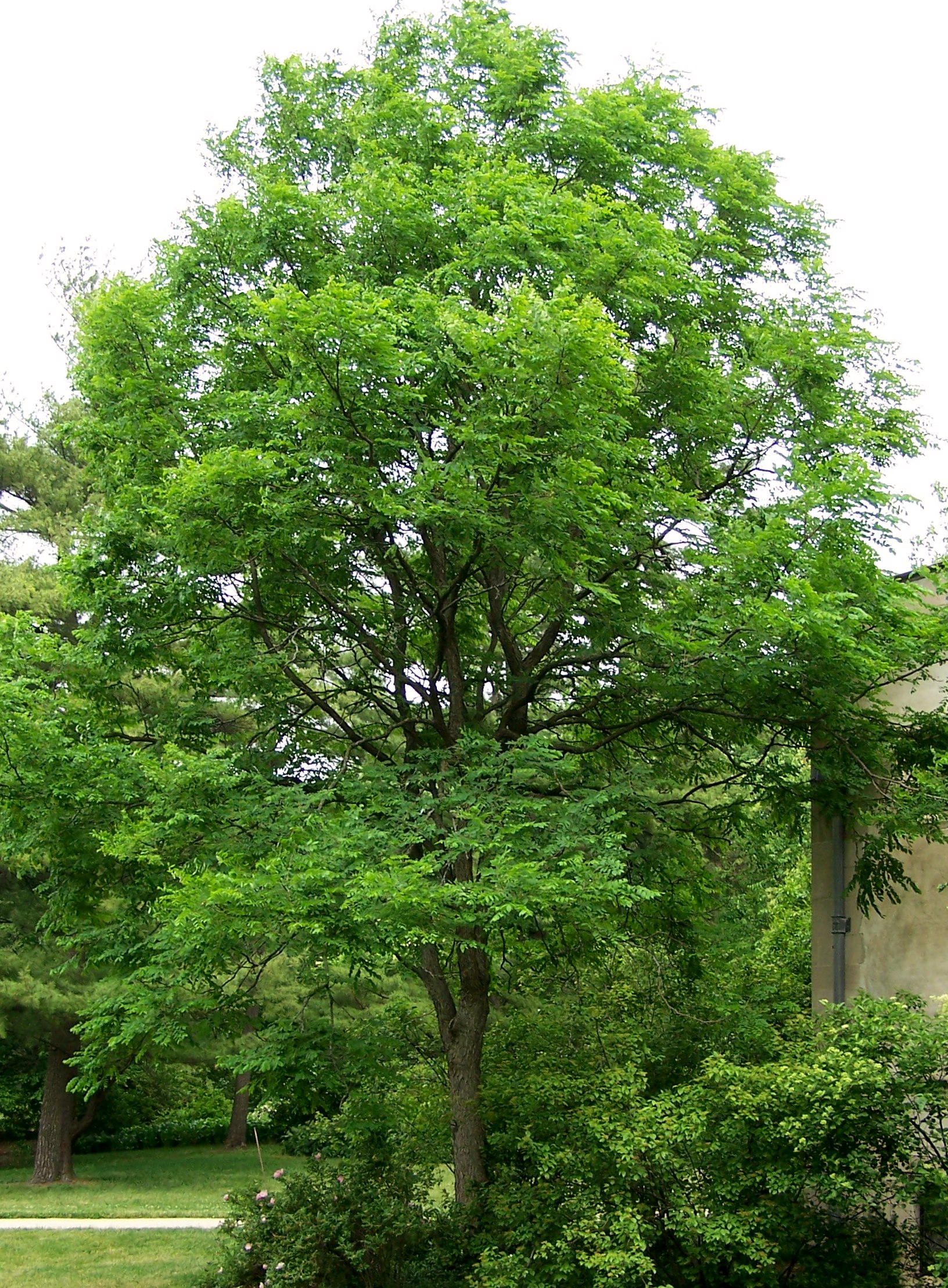
Gymnocladus dioicus is a large deciduous shade tree with a broad, open crown and a bold, architectural appearance. It is highly valued for its coarse branching, distinctive bark, large bipinnately compound leaves, and exceptional tolerance to drought, heat, and urban conditions.
The foliage consists of very large, bipinnately compound leaves that emerge pinkish bronze in spring, mature to bluish-green during summer, and turn clear yellow in autumn before dropping early. In late spring to early summer, fragrant greenish-white flowers appear in upright clusters. Female trees produce large, thick, dark brown seed pods containing hard seeds that often persist into winter.
Gymnocladus dioicus grows best in full sun and well-drained soils but adapts well to clay, loam, limestone, and urban soils. Once established, it is highly tolerant of drought, pollution, heat, road salt, and difficult growing conditions. It is an outstanding choice as a shade tree, street tree, park tree, or specimen for large landscapes.




Fiche technique
| Ensoleillement | Sunny |
| Hauteur | 5m and + |
| Largeur | 5m and + |
| Zone de rusticité | 5a, 5b |
| Période de floraison | May-June |
| Endroit | Isolated |
| Fleur coupée | Non |
| Fleur parfumée | Oui |
| Attire les oiseaux | Oui |
| Attire les papillons | Oui |
| Comestible | Non |
| Type de sols | Moderately dry / well-drained soil |
| Condition environnementale | High drought resistance, High pollution resistance, High salt resistance |
| Feuillage | Green |
| Couleur de fleur | Greenish |
| Fruits | No |
Recherche
de végétaux